



What Actually Makes the Warmest Socks Warm
The first instinct with cold feet is to buy the thickest sock in the drawer. Then your boots are tight, your feet sweat, the sock gets damp, and by the walk home you're colder than you were in the thin pair.
The short answer on the warmest socks: warmth comes from four things working together. Dryness, because wet fabric pulls heat off your skin far faster than dry fabric. Insulation, meaning fibers that trap air without packing down. Room, because a sock or boot that squeezes your foot restricts blood flow, and blood is what's actually keeping your toes warm. And coverage, because heat leaves through bare skin above a short sock. Thickness only helps once the other four are handled.
Here's what each one is doing.
Dryness. Your feet sweat even in the cold, especially inside a boot. A sock that absorbs that sweat and holds it against your skin becomes a wet layer, and a wet layer conducts heat away from you. This is why a thick cotton sock feels great for the first hour of a winter walk and cold for the next three. The warmest socks move moisture off your skin and either dry fast or, in the case of wool, stay warm while damp.
Insulation. Warmth is trapped air. Fibers with natural crimp and loft, like wool, hold air in the fabric. Dense, flat knits don't, regardless of how thick they are.
Room. Tight socks and tight boots are the most overlooked cause of cold feet. If you can feel the cuff, or your toes are pressed together, your circulation is doing less work than it should and no sock will fix that. A sock should fit snugly through the arch and ankle and leave your toes free.
Coverage. A no-show or ankle sock in winter leaves the ankle and lower calf exposed, and in a boot it leaves a gap where the shaft meets your leg. Crew or half calf closes that gap.

Merino vs. Cotton vs. Performance: Which Winter Socks Keep Feet Warmest
Material decides most of the first two factors, dryness and insulation, so it's the right place to start.
Merino wool is the winter fiber. It insulates because wool fibers trap air, it takes on moisture as vapor without feeling wet, and it keeps insulating even when it's damp, which no other common sock fiber does. It also resists odor naturally, which matters when boots go on at 7 a.m. and come off at 6. Modern merino is fine-gauge and soft; Strideline describes the fiber in its Merino Wool Cloud Crew as low-micron and "soft, not scratchy," with insulating properties that, in the brand's words, keep you "cool in the summer and warm in the winter." For most people, merino is the answer to "warmest socks" for daily winter wear.
Performance synthetics don't insulate the way wool does, but they move moisture and dry fast, which keeps the dryness factor handled. They're the right winter sock for anything active: a cold run, a gym session in an unheated space, shoveling. You generate the heat; the sock's job is to keep you dry so you don't lose it. Strideline's Performance collection covers this in crew and ankle.
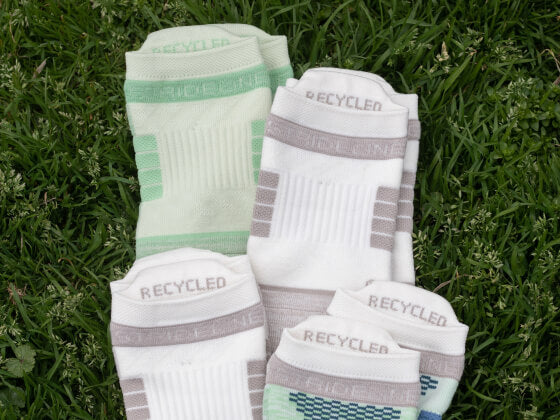
Combed cotton is soft and comfortable, and it's the fiber most people are already wearing when their feet get cold. The problem is that cotton absorbs moisture and dries slowly, so it fails the dryness test in a boot or on a long walk. Where cotton works in winter is indoors and in dry cold for short stretches: around the house, at a desk in a heated office, a quick errand. Strideline's Combed Cotton Premium Crew (from $12) is the softest sock in the line and comes in more than 20 colors, and the same knit is in the Half Calf 8-Pack if you want cotton in the tallest height.
The short version: merino for the commute, the boots, and the stadium; performance for exertion; cotton for indoors. The sweaty-feet guide covers the moisture side in more depth if your feet run wet year-round.

Do Thicker Socks Mean Warmer Feet?
Sometimes. Usually not as much as people expect, and often the opposite.
A thicker sock adds insulation only if there's room for it. Inside a boot that already fits, a thick sock compresses your foot, flattens the fibers that were supposed to trap air, and restricts circulation. You end up with a sock that's technically thicker and a foot that's colder. Boot fitters see this constantly: someone buys thermal socks for winter and their toes go numb faster.
A thicker sock also holds more moisture if it's cotton, which means more wet fabric against your skin once you've sweated into it.
So the rule is: match sock thickness to the room in your shoe, and get warmth from the fiber, not the bulk. A mid-weight merino sock in a boot with a little room will outperform a heavy thermal sock in a boot that's now too tight. If you want a genuinely thicker sock for winter, size the boot for it.
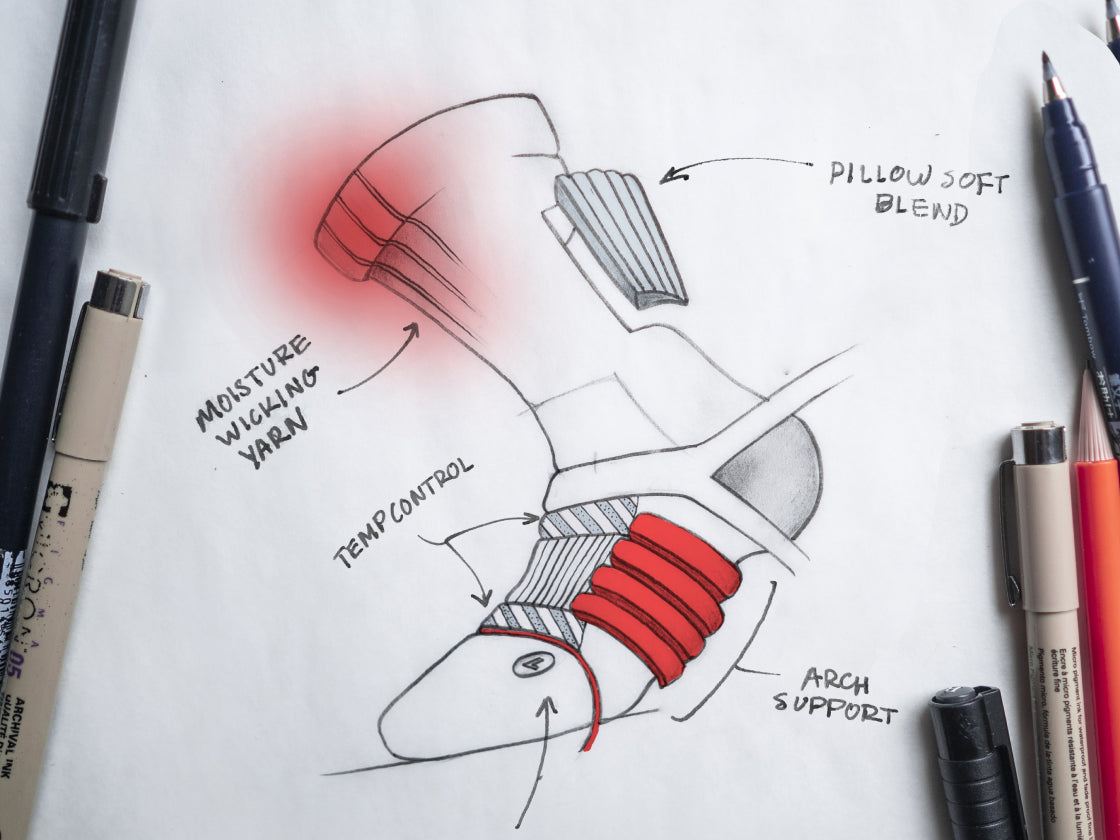
Strideline's Merino Wool Cloud Crew is a mid-weight, which is deliberate: it fits the shoes people already own. Strideline doesn't make an expedition-weight thermal sock, and for daily winter wear in normal footwear, that's the right call. The cushioning is where it helps, at the heel and forefoot, with thinner knit over the top of the foot so the sock isn't bulky where the laces sit.

Strideline's Warm Socks for Cold Feet, by Situation
For the commute and the office. The Merino Wool Cloud Crew (3-Pack from $38, 4-Pack $59.99) in Cloud light grey or dark grey. It's warm on the walk to the train, doesn't overheat at a desk, and the odor resistance means it's fine through a full day. Crew height covers the ankle gap above a low boot or dress shoe.
For boots and snow. Height and fiber both matter. For a low boot or chukka, the Merino Cloud Crew clears the shaft and handles the moisture. For a taller work or western boot, the sock has to be half calf to sit above the shaft, and the Half Calf 8-Pack ($49.99) is Strideline's tallest cut; it's combed cotton, so it's the pick for dry cold and shorter wear rather than a wet, all-day slog. The boot socks guide covers the height question in detail.
For the tailgate and the stands. Standing still in the cold for four hours is the hardest test a sock takes, because you're not generating heat. The licensed NCAA and NFL Half Calf 2-Packs ($19.99) give you the tallest cut with a polyester-nylon knit that moves moisture, and they're what most people are wearing to a November game anyway. If you run cold, wear the merino under the boot and save the team sock for a warmer game.
For winter workouts and shoveling. The Performance Premium Crew 4-Pack ($54.99). You'll be sweating; the sock's job is to keep that sweat off your skin so you don't chill when you stop.
For the house. The Combed Cotton Premium Crew (from $12). Indoors, dryness isn't the problem, so cotton's softness wins. Pick a color you'll actually want to see on the couch; there are 21 of them.
For sore, tired winter feet. Cold and standing all day compound each other. The Cushioned Socks collection pulls together the most padded options in the line, including the Merino Cloud Crew and the Bounce 2.0 packs.
How to Keep Feet Warm in Winter, Beyond the Sock
The right sock does most of it. A few habits do the rest.
Start dry. Never put on socks that aren't fully dry, and never put your feet into boots that are still damp from yesterday. Two pairs of winter shoes in rotation, each drying for a day, is the biggest single improvement most people can make.
Loosen up. If your toes are cold in boots, loosen the laces a notch before you add a thicker sock. Circulation beats insulation.
Change after the commute. If you walk or wait in the cold on the way to work, a dry pair at your desk resets your feet for the day. It takes thirty seconds.
Size correctly. A sock that's too big bunches under your foot; a sock that's too small stretches thin and squeezes. Strideline runs Small (men's 4–8), Medium/Large (8–12), and Extra Large (12–16), with women's Small (5.5–9.5) and Medium/Large (9.5–13), and the size guide says to size up between sizes.
Cover the gap. In a boot, make sure the sock cuff clears the top of the shaft. In shoes, pick crew over ankle from November through March. Bare skin above the sock is where heat leaves.
Move. Warm feet come from blood flow. If you've been standing still for an hour at a game or a bus stop, the fix is to walk for two minutes, not to buy a thicker sock.
If your feet are cold constantly, indoors and out, regardless of what you wear, that's worth mentioning to a doctor. Socks solve most cold feet; they don't solve all of them.
Warm feet in winter come down to a sock that stays dry, traps air, leaves your toes room, and covers the gap above your shoe. For most days that's merino, for exertion it's a performance knit, and for the couch it's cotton. Start with a Merino Wool Cloud Crew 3-Pack and wear it for a week of commutes; if your feet are still cold, loosen the laces before you go thicker.
FAQ
What kind of socks are warmest?
Merino wool, for daily wear. Wool fibers trap air, take on moisture without feeling wet, and keep insulating even when damp, which cotton and most synthetics can't do. A mid-weight merino crew in a shoe with room for it will keep feet warmer than a thick cotton sock, which gets damp and then cold.
What socks are best for cold feet?
Socks that stay dry, don't squeeze, and cover the ankle. Merino handles the first; correct sizing and a boot that isn't over-tightened handle the second; crew or half calf height handles the third. If your feet are cold in thick socks, the problem is usually a tight shoe or damp fabric, not a lack of thickness.
What are the best socks for staying warm in winter?
For the commute, the office, and standing outside, a merino crew like Strideline's Merino Wool Cloud Crew. For boots with a tall shaft, a half calf so the cuff sits above the boot collar. For winter workouts or shoveling, a moisture-wicking performance knit, since you'll be sweating and the sock's job is to keep you dry.
Do thermal socks actually work?
They add insulation, but only if there's room for them. In a boot that already fits, a heavy thermal sock compresses your foot and restricts circulation, which makes feet colder, and if it's cotton it holds sweat against your skin. A mid-weight merino sock in properly fitted footwear usually outperforms a thick thermal sock in footwear that's now too tight. Strideline doesn't make expedition-weight thermal socks; its merino is a mid-weight built to fit the shoes people already own.
Are merino wool socks worth it?
For winter, yes, if you're outside or in boots for any length of time. Merino is the only common sock fiber that stays warm when damp and resists odor on its own, which is why it's the standard for cold-weather and hiking socks. If you're mostly indoors, a soft combed cotton sock does the job for less.