



What Makes the Most Comfortable Socks Feel That Way?
Every sock brand says comfortable. Almost none of them say what that means. So you buy a pack, wear them for a week, and figure out for yourself whether they slip, bunch, squeeze, or get swampy by 3 p.m.
The short answer: the most comfortable socks get six things right at once. Cushioning where your foot takes impact. A fit that matches the shape of your foot instead of a tube. Pressure that holds the sock in place without cutting in. Seams you can't feel. Breathability that moves sweat off your skin. And enough stretch and recovery that the sock moves with you and springs back instead of sagging.
Miss one and you notice. A heavily cushioned sock with a loose cuff slides into your shoe. A snug sock with a bulky toe seam rubs. A soft cotton sock with no ventilation is great for an hour and damp by lunch.
Here's what each one is doing, and how to tell whether a sock actually has it.
Cushioning is padding under the foot, usually terry loops, placed where you land: heel, ball of the foot, and arch. More isn't always better. A sock padded everywhere feels thick and hot; a sock padded in zones feels supportive without bulk.
Fit is whether the sock is shaped like a foot. Cheap socks are straight tubes that rely on stretch to conform. Better socks are knit with a defined heel pocket, arch, and toe so there's nothing to bunch.
Pressure is how the sock grips. You want a light hold through the arch and ankle that keeps it in position, and a cuff that stays up without leaving a ring on your leg.
Seams matter most at the toe. A thick seam across the top of your toes is the thing you feel on mile three of a walk.
Breathability is how well the fabric moves moisture. Vented panels over the top of the foot and fibers that pull sweat away from the skin are the two signs to look for.
Movement is stretch plus recovery. A sock should flex when you push off and return to shape when you relax, wash after wash.
Strideline's socks are built around exactly these six, and the rest of this guide walks through how.

How Cushioned Socks and Compression Work Together
Cushioning gets all the attention, but cushioning without hold is what gives you a padded sock that's bunched under your arch by the second block. Strideline solves it by pairing two things.
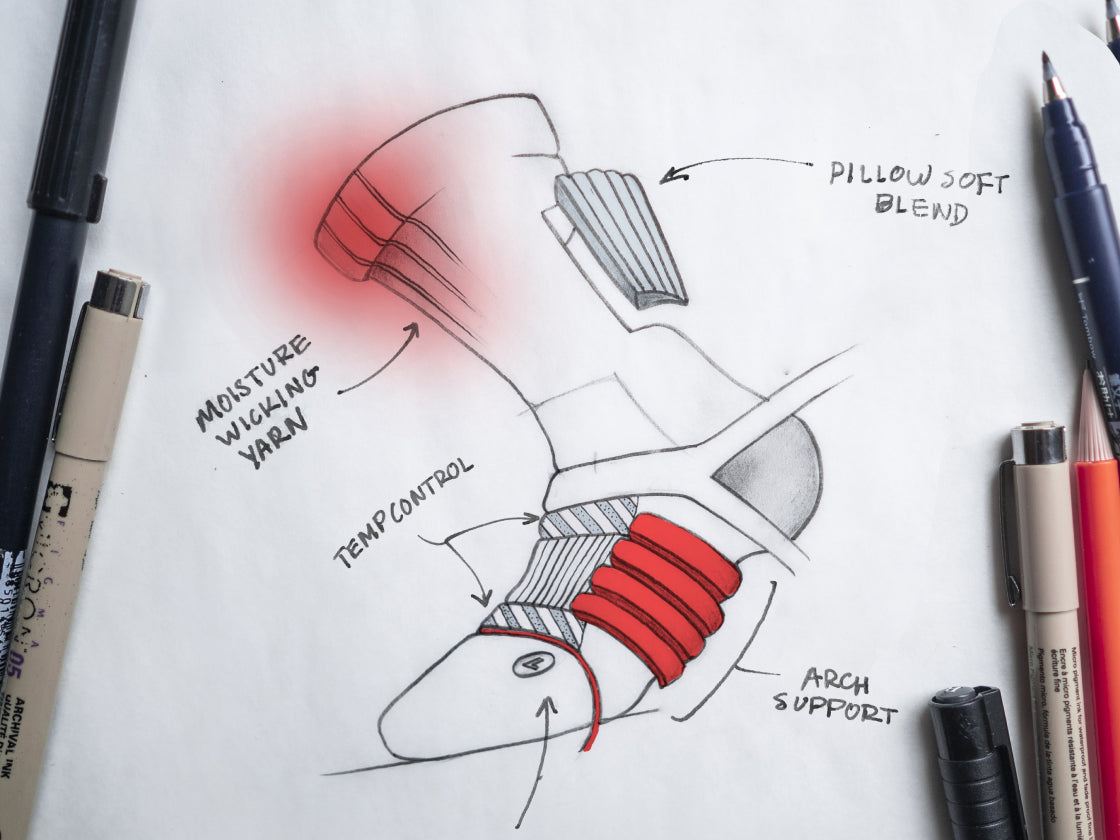
The first is the Quad-Ply Yarn padding system. Strideline places four-ply yarn below the transverse arch and around the medial and lateral arches, which is the part of the foot that spreads and absorbs load with every step. On top of that, the socks use zoned cushioning, meaning the terry padding is concentrated at the heel and forefoot where you land and push off, and thinner over the top of the foot where you don't need it. The result is a sock that feels cushioned underfoot without feeling thick overall.
The second is Direct Compression. This isn't a medical compression sock. Strideline's version is a knit that hugs the contour of your ankle and arch with what the brand describes as "snugness without tightness and flexibility without slippage." The point is to hold the padding in place so it's still under your arch at the end of the day, not to squeeze your calf.
The piece that ties the two together is the Strideline Heel Strap. It's a patented band knit around the heel that wraps the ankle and Achilles and keeps the heel pocket seated, without restricting how your ankle flexes. A sock that slides down into your shoe is almost always a heel-pocket problem, and this is the part of the construction that addresses it.
You'll find all three across the line, from the Basic Crew Socks (from $14 a pair) to the Performance Premium Crew 4-Pack ($54.99). Strideline's technology page walks through each one in more detail.

Why Contour Fit Matters for All-Day Wear
Cushioning and hold handle the bottom of your foot. Contour Fit handles everything else: whether the sock follows the shape of your foot or fights it.
Strideline knits its socks with shape-memory fibers, so the sock stretches to your foot when you put it on and pulls back to its knit shape when you take it off. In practice, this is why a pair still fits the same way after a season of washes, and why it doesn't sag at the cuff by the afternoon.
The socks are also labeled by foot, with a defined left and right, and knit with a shaped heel pocket, arch, and toe. That's what stops the three things that make a sock feel wrong: bunching under the arch, slipping at the heel, and twisting so the seam ends up on top of your toes.
Moisture is the other half of all-day comfort. Strideline's socks use mesh vents across the top of the foot and hydrophilic fibers in the knit, which pull sweat off your skin and let it evaporate through the vents. Odor control is built into the fabric, which Strideline sums up on its product pages as "No stank = no worrying when taking your shoes off."
Fit also comes down to buying the right size. Strideline runs Small (men's 4–8), Medium/Large (8–12), and Extra Large (12–16), with women's sizes Small (5.5–9.5) and Medium/Large (9.5–13), and youth sizes on the basics. If you're between sizes, the size guide says to size up, because a sock stretched to its limit loses its cushioning and its recovery first.
Choose the Right Strideline Height for Your Routine
Comfort features are the same across every Strideline height. What changes is coverage and where the cuff lands, which is mostly a footwear and wardrobe decision. The short version, tallest to shortest:
Half Calf rises partway up the calf and is the height for boots, high-tops, and licensed team socks with a big graphic. Crew sits on the lower calf above the ankle and is the everyday default for sneakers, trainers, and work shoes. Mid lands above the ankle bone and below a crew, for low-tops and warm weather. Ankle covers the ankle bone and little else, for runners and shorts. No-Show disappears inside the shoe entirely.
If you're deciding between half calf, crew, and mid, the full comparison is in Half Calf vs Mid vs Crew Socks: Sock Heights Explained. This guide sticks to what's inside the sock.
How to Find Your Everyday Pair
Once you know what comfort is made of, picking a pair is mostly about matching the routine.
For work and everyday wear, start with The Basics. Strideline describes them as "15 years. 20+ million pairs sold. 15 major design iterations. Nothing basic about them," and the collection page shows a 4.8-star average from more than 20,000 reviews. The Basic Crew (from $14), Basic Mid (from $12), Basic Ankle (from $12), and Basic No-Show (from $10.50) all share the Quad-Ply Yarn, Heel Strap, and Contour Fit construction in solid white, black, grey, and navy. If you want a softer hand, the Combed Cotton Premium Crew and Ankle 4-Packs ($49.99 and $45.99) are the same build in combed cotton.
For walking and standing all day, the priority is cushioning that stays under your arch and a cuff that doesn't slide. Crew is the practical height because the Heel Strap has the most to grip, and the Half Calf 8-Pack ($49.99) is the pick if you're in boots. If you walk in warm weather, the mesh vents matter more than the padding, and an ankle or mid will run cooler.
For training, look at the performance side of the line. The Performance Premium Crew 4-Pack ($54.99) and Performance Ankle Socks (from $14) carry the same construction in a knit built for sweat, and the Performance Bounce 2.0 multi-packs come in crew, quarter, and low cuts for anyone who wants a matched set for the gym. For cold-weather training, the Merino Wool Cloud Crew packs add wool to the same build.
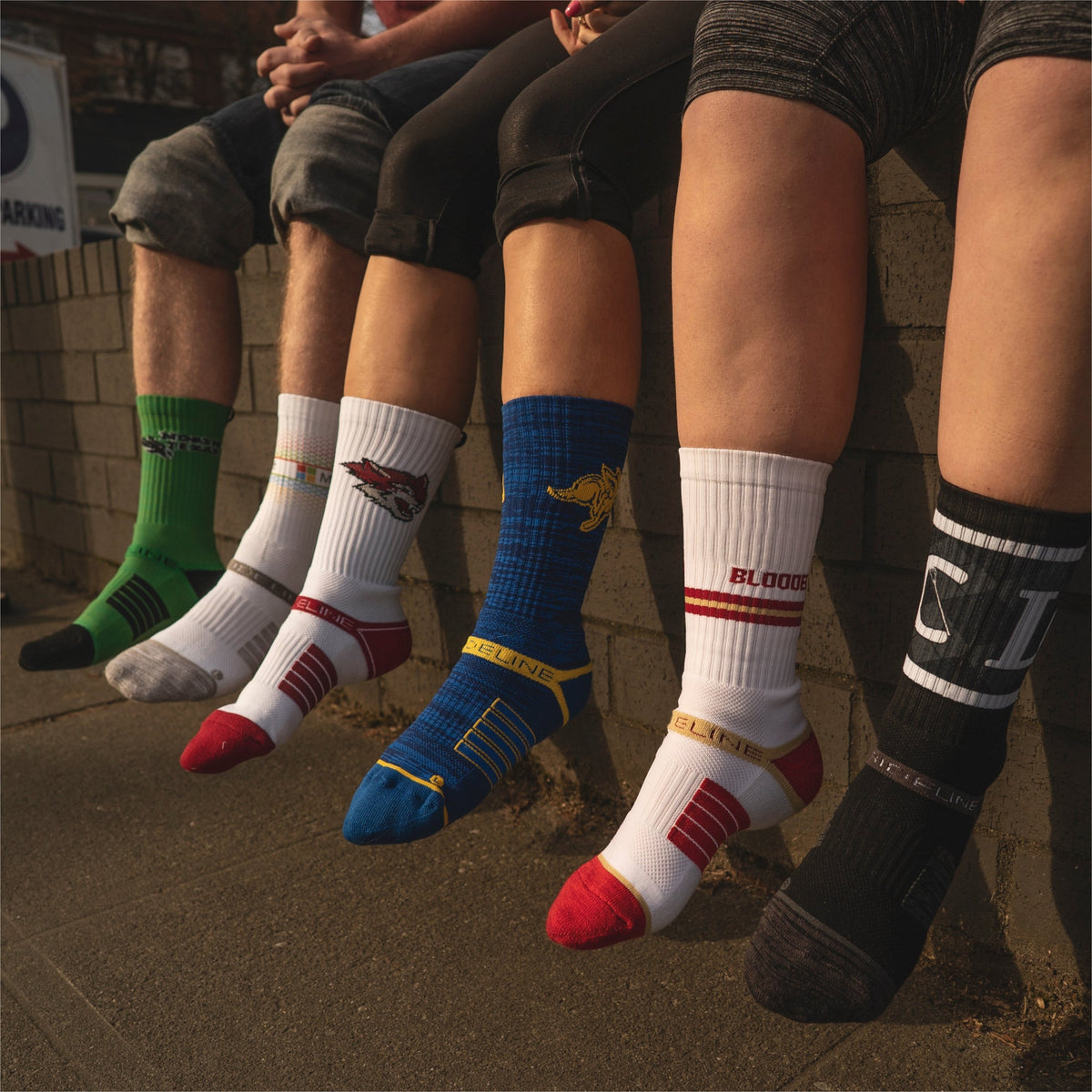
For game day, the Fan Wear collection puts officially licensed NFL, NCAA, MLS, and MLBPA graphics on, in Strideline's words, "our most comfortable build." The NCAA collection alone covers more than 300 schools in half calf 2-packs and premium crew 3-packs, and the construction underneath is the same as the basics. A team sock doesn't have to feel like a novelty sock.
Comfort in a sock isn't one feature. It's cushioning that stays put, a fit that matches your foot, pressure that holds without squeezing, seams you forget about, fabric that breathes, and stretch that recovers. Strideline builds all six into every pair, which is what the tagline "The Most Comfortable Sock on Earth" is actually pointing at. Start with a 3-pack from The Basics in the height you wear most, and judge for yourself by the end of the week.

FAQ
What is the most comfortable sock in the world?
The honest answer is the one that fits your foot and your routine, because comfort is six things working together, not one. Look for zoned cushioning under the heel and forefoot, a shaped heel pocket that doesn't slip, a cuff that holds without leaving a mark, a flat toe seam, ventilation over the top of the foot, and fabric that springs back after washing. Strideline builds its whole line, basics through licensed team socks, around those six.
What socks should I wear so my feet don't stink?
Choose socks with moisture-wicking fibers and ventilation, so sweat moves off your skin and evaporates instead of sitting in the fabric, and rotate pairs so each one dries fully between wears. Strideline's socks use mesh vents and hydrophilic fibers for this and have odor control built into the knit.
Are cushioned socks better for walking?
For most people, yes, as long as the cushioning is zoned and the sock stays in place. Padding at the heel and forefoot absorbs impact where you land and push off. Padding everywhere adds heat and bulk, and cushioning that slides out from under your arch is worse than none, which is why a secure heel matters as much as the padding itself.
Are cotton or synthetic socks more comfortable?
It depends on the day. Combed cotton feels softer against the skin and suits everyday wear. Synthetic blends and wool move moisture better and hold their shape through sweat, which suits training and long days on your feet. Strideline makes both, with the same cushioning and fit construction in each, so you can pick by feel and use rather than by feature.
Do Strideline's basics and team socks feel the same?
The construction is the same: Quad-Ply Yarn padding, the Heel Strap, Contour Fit, and moisture-wicking knit. The differences are the fiber blend and the graphics. Licensed socks are knit from polyester-nylon blends with sublimated team designs, while the basics come in combed cotton, performance, merino, and recycled fibers.