



What Makes the Best Boot Socks Different From Everyday Socks
Boots ask more of a sock than sneakers do. The shaft rubs against your leg. The heel is stiffer, so a sock that slips gets pulled down harder. The upper is leather or heavy canvas, so nothing vents. And you're usually in them for eight hours, not one.
The short answer on the best boot socks: they're tall enough that the cuff sits above the top of the boot, cushioned at the heel and forefoot where a stiff sole hits hardest, built with a heel that won't slide down inside the boot, and knit to move moisture because the boot won't. For most people that means a half calf or crew in a performance knit or merino wool, sized correctly, with the height chosen to match the boot's shaft.
Three things go wrong when you wear the wrong sock in a boot. The cuff sits below the shaft and the boot's collar rubs bare skin. The heel of the sock slides under your foot because a boot's stiff heel counter grabs the fabric with every step. And the sock soaks through, because the only place moisture can leave a boot is out the top.
Fix those three and you've fixed boot socks. The rest of this guide is how.

Height: Why Socks for Boots Need to Clear the Shaft
Height is the first decision, and for boots it's not a style choice. The sock has to be taller than the boot.
If the cuff sits below the shaft, the top of the boot rubs directly on your leg, the sock has nothing above the boot to hold onto, and it gets dragged down inside with every step. If the cuff sits above the shaft, the boot's collar rides on fabric instead of skin, and the sock has a few inches of leg to grip.
Strideline's two tallest heights are the ones that work in boots. Half Calf is the tallest cut Strideline makes and rises partway up the calf, which clears work boots, hiking boots, chukkas, and most western boot shafts. Crew sits on the lower calf above the ankle, which clears low boots, chukkas, and hiking shoes but will sit at or below the shaft of a taller work or western boot. Mid, ankle, and no-show socks belong with sneakers, not boots.
A quick way to check: put on the boot with the sock, sit down, and pull your pant leg up. If you can see skin between the boot collar and the sock cuff, go taller. The height guide covers where each Strideline height lands if you want the full comparison.
Thin or Thick? Cushioning, Fit, and the Boot You're Wearing
"Are thin or thick socks better for boots?" is the most-asked question on this topic, and the honest answer is that it depends on how the boot fits.
If the boot is snug, a thick sock crowds your foot, cuts circulation to your toes, and makes a long day longer. Go with a sock that's cushioned under the foot but thin over the top.
If the boot has room, a thicker sock fills the volume, stops your foot from sliding forward, and adds warmth. This is why boot fitters tell you to bring the socks you'll actually wear when you try boots on.
Either way, the padding should be where the boot hits hardest: heel and forefoot. A boot's sole is stiffer than a sneaker's, so every step lands harder in those two spots. Padding over the top of the foot, where the boot's laces sit, just adds bulk and heat.
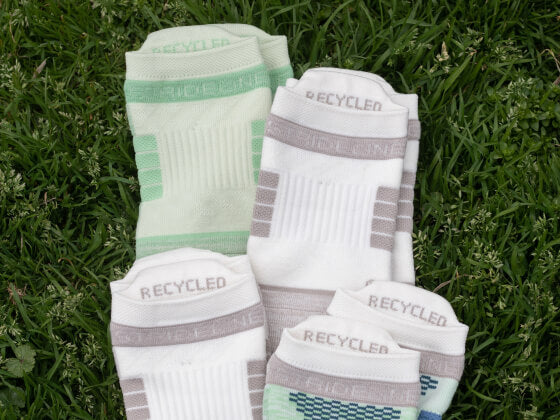
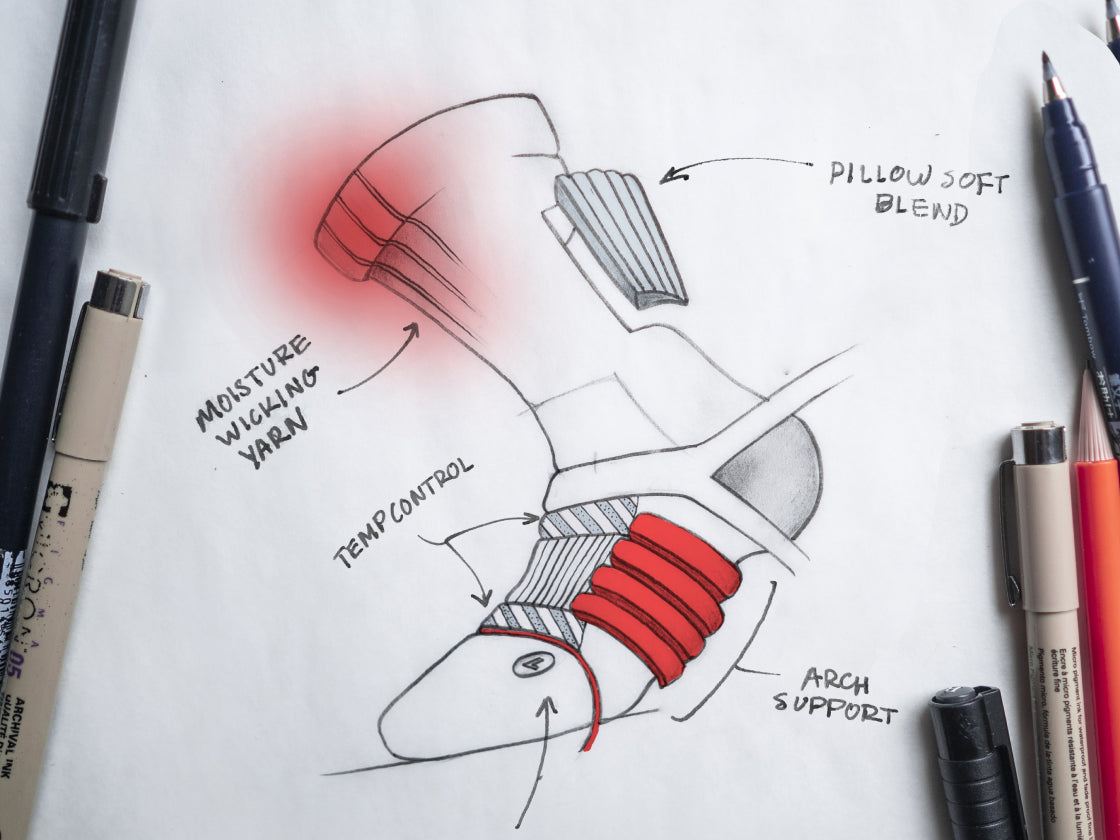
Strideline builds every sock this way. The Quad-Ply Yarn padding sits below the arch and at the heel and forefoot, with thinner knit over the top of the foot. So the Half Calf 8-Pack is cushioned where a boot needs it and not where it doesn't, without being a thick sock overall.
Fit matters even more in a boot than a sneaker, because a boot's stiff heel counter grabs any sock that isn't anchored. The Strideline Heel Strap wraps the ankle and Achilles to keep the heel pocket seated, and Direct Compression through the arch holds the body of the sock in position. If your socks slide down inside your boots, the stay-up guide explains why and what to look for.
And size correctly. A sock that's too big bunches inside a boot with nowhere to go. Strideline runs Small (men's 4–8), Medium/Large (8–12), and Extra Large (12–16), with women's Small (5.5–9.5) and Medium/Large (9.5–13); the size guide says to size up if you're between sizes.

Material: Cotton, Performance, or Merino Under a Boot
A boot is the hardest environment for a sock's fabric, because nothing vents. Whatever moisture your foot produces stays in the boot unless the sock moves it up and out the top.
Merino wool is the boot-sock standard for a reason. It takes on moisture as vapor without feeling wet, resists odor naturally, and insulates, which means warm in a cold boot and not clammy in a warm one. Strideline's Merino Wool Cloud Crew (3-Pack from $38, 4-Pack $59.99) uses what the brand describes as fine, low-micron merino that's "soft, not scratchy," with odor-resistant fibers. It's crew height, so it's the pick for low boots, chukkas, and hiking boots, and for anyone whose work boots have a shorter shaft.
Performance synthetics move moisture along the fabric and dry fast. In a boot they run cooler than cotton and hold up to sweat. Strideline's Performance collection is crew and ankle height, so the Performance Premium Crew 4-Pack ($54.99) is the synthetic option for boots with a lower shaft.
Combed cotton is soft and comfortable but absorbs moisture and dries slowly, which is a real limitation in a boot. The exception is a boot you wear for shorter stretches, or in dry cold, where cotton's softness matters more than its moisture handling. Strideline's Half Calf 8-Pack ($49.99, eight pairs) is combed cotton in the tallest height, which makes it the everyday boot sock for people whose boots are more style than jobsite. The mesh vents and hydrophilic fibers are still there, so it handles moisture better than a plain cotton tube.
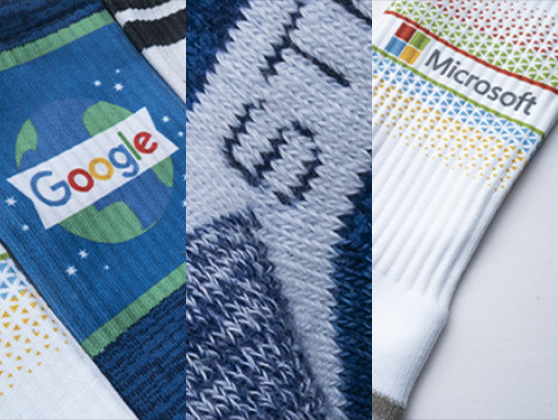
Licensed knits are polyester-nylon (the NCAA Half Calf is 83% polyester, 11% nylon) with the same moisture-wicking and odor control as the basics. They're the surprise answer to "what socks do I wear with boots to the game," covered below.
If your feet run wet regardless of boot, the sweaty-feet guide goes deeper on material.

Best Strideline Socks for Boots by Boot Type
Work boots and steel toes. Height first: the sock has to clear the shaft, so half calf for a standard eight-inch work boot, crew for a six-inch. Then cushioning at the heel and forefoot, because a stiff sole and a steel cap punish both. Then moisture, because a work boot is sealed. The Half Calf 8-Pack covers the height and cushioning for the taller boot; the Merino Wool Cloud Crew is the pick for a six-inch boot on a long shift. With steel toes, avoid anything with a thick toe seam, since the cap will press it into your toes all day.
Hiking boots. Merino, crew height, cushioned heel and forefoot, secure heel. That's the Merino Wool Cloud Crew description almost word for word. The Heel Strap matters most here, because a sock that slides in a hiking boot on a descent is how a hot spot starts.
Western and cowboy boots. Tall, smooth shaft, no laces, and a heel that lifts a little with every step, which pulls a sock down harder than any other boot. Half calf is the height, and the Heel Strap is the feature. The Half Calf 8-Pack in a solid color is the everyday answer. For a very tall shaft, know that half calf is the tallest Strideline makes; it clears most western boots but not all.
Chukkas, Chelsea boots, and casual boots. These have low shafts, so crew clears them and half calf shows above them, which is a style call. The Basic Crew Socks (from $14) in black, grey, or navy disappear under a pant leg; the Merino Cloud Crew adds warmth for winter.
Game day in boots. A November tailgate in boots is where a licensed half calf earns its keep. The NCAA Half Calf 2-Pack ($19.99, two pairs, more than 300 schools) and the NFL and MLS versions in the Fan Wear collection are the tallest licensed cut, with the graphic sitting above the boot where people can see it and the same Heel Strap and moisture handling as the basics. If you've been wearing a novelty team sock in your boots and tugging it up every quarter, this is the fix.
The best boot socks are the ones you stop noticing by the second hour: tall enough to clear the shaft, cushioned where the sole hits, anchored at the heel, and knit to move moisture out of a boot that can't breathe on its own. Match the height to your boot, the material to your day, and the size to your foot. Start with the Half Calf collection for taller boots or the Merino Cloud Crew for lower ones, and check the cuff against the boot collar before you leave the house.

FAQ
What type of socks are best to wear with boots?
A sock that's taller than the boot's shaft, cushioned at the heel and forefoot, built with a secure heel so it doesn't slide down inside the boot, and made from a fabric that moves moisture, since a boot can't vent on its own. Half calf or crew in merino or a performance knit covers most boots; combed cotton works for shorter wear in dry conditions.
What are the best socks to wear under boots?
For work and western boots with a taller shaft, a half calf sock. For chukkas, Chelsea boots, hiking boots, and six-inch work boots, a crew. Strideline's Half Calf 8-Pack is the tallest option in its line, and the Merino Wool Cloud Crew is the pick for hiking and shorter work boots.
Are thin or thick socks better for boots?
It depends on the boot's fit. In a snug boot, a thick sock crowds your foot and cuts circulation to your toes; choose a sock cushioned under the foot but thin on top. In a roomy boot, a thicker sock fills the space and stops your foot sliding forward. Either way, the cushioning belongs at the heel and forefoot, not over the top of the foot.
What material of socks is best for work boots?
Merino wool or a performance synthetic. Both move moisture out of a sealed boot and resist odor; merino also insulates. Cotton absorbs sweat and dries slowly, which makes it the weakest choice for a long shift in a work boot, though it's fine for a casual boot worn for a few hours.
How tall should boot socks be?
Tall enough that the cuff sits above the boot's collar when you're standing and sitting, so the boot rides on fabric rather than skin and the sock has leg to grip. Half calf clears most work, hiking, and western boots. Crew clears low boots and chukkas. Knee-high boots need a taller sock than Strideline currently makes.